For fast-growing ecommerce brands, order fulfilment can become increasingly complex as order volumes grow.
More orders mean more picking and packing, stock movements, dispatch, and returns to manage. Without well-structured fulfilment processes in place, seemingly minor operational issues can gradually turn into more costly fulfilment challenges.
Slow dispatch, inaccurate stock levels, picking errors and poorly managed returns can all affect customer satisfaction and brand reputation.
The good news is that you don’t necessarily need to overhaul your entire fulfilment operation completely. By optimising a few key areas, you can make your order fulfilment process faster, more accurate and easier to manage.
Here are six practical ways to help streamline your order fulfilment.
1. Real-Time Stock Levels and Automated Order Processing
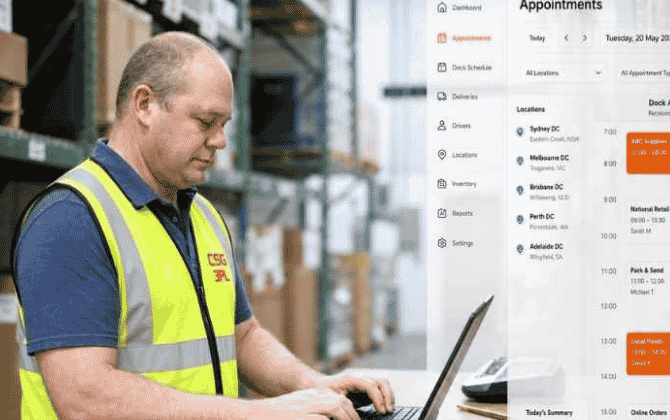
Manually managing orders and stock is not only time-consuming but also prone to errors. Integrating an Order Management System (OMS) with a Warehouse Management System (WMS) can improve order processing efficiency, stock visibility and fulfilment accuracy while reducing manual work.
OMS
An OMS can integrate with ecommerce platforms such as Shopify, Amazon and eBay to automatically synchronise, process and allocate orders, while updating order statuses in real time.
WMS
A WMS is primarily responsible for inventory and warehouse operations. It can assign products to specific storage locations, automatically update stock levels and improve inventory accuracy through barcode scanning. For brands that need to manage expiry dates, a WMS can also support FIFO (First In, First Out) and FEFO (First Expire, First Out) processes.
Put simply, the OMS determines how orders are processed, while the WMS determines how stock moves through the warehouse.
When these two systems work together, brands gain better visibility of their orders and stock, helping reduce stock discrepancies, overselling and stockouts.
When Should You Consider Using an OMS and WMS?
An OMS and WMS can be particularly useful when you are processing more than 200 orders per month, spending too much time on manual order processing, managing multiple ecommerce platforms or regularly experiencing stock discrepancies, overselling or stockouts.
2. Optimise Your Warehouse Layout

If warehouse staff spend too much time searching for products, picking times increase, dispatch can be delayed and orders can start to build up.
An efficient warehouse should be organised based on factors such as sales frequency, product dimensions and picking requirements.
High-volume SKUs can be placed in easily accessible locations close to the picking and packing areas, while lower-volume products can be stored in less accessible locations.
Clear product locations, organised shelving and clearly defined storage areas can also help new warehouse staff learn the operation more quickly.
For ecommerce brands with a large number of SKUs, an efficient warehouse layout can reduce unnecessary movement and allow warehouse staff to process more orders in less time.
3. Optimise Your SKU Range and Standardise Packaging
Brands should regularly review products with consistently low sales, overlapping product variations or limited contribution to the business. Optimising the SKU range can reduce unnecessary storage requirements and make high-volume products easier to locate and pick.
For brands that frequently sell multiple products together, kitting or bundling can also reduce the number of picking operations required per order.
For example, if three SKUs are frequently purchased together, they can be prepared as a bundle in advance or assembled during the fulfilment process, depending on order volume, stock turnover and operational requirements.
Standardising 3PL packaging workflow can also improve packing efficiency. Using consistent packaging materials, satchels, cartons, labels and packing procedures allows warehouse staff to follow a repeatable process, reducing unnecessary handling time and improving overall packing efficiency.
4. Choose the Right 3PL and Shipping Partners
For growing ecommerce brands, managing fulfilment in-house can eventually take up a significant amount of time and internal resources.
A reliable 3PL provider can manage receiving, warehousing, stock management, picking, packing, dispatch, freight and returns, allowing brands to spend less time managing day-to-day warehouse operations and more time focusing on marketing, customer service and business growth.
A good 3PL will typically work with multiple carriers and help brands select suitable delivery options based on destination, delivery time, parcel size and cost.
Combining the right fulfilment processes with suitable shipping solutions can help improve delivery speed while keeping fulfilment and freight costs under control.
5. Standardise Processes and Train Your Warehouse Team
Even the best fulfilment system will only be effective if warehouse staff can use it correctly and consistently.
Standardised processes should be established for receiving, put-away, picking, packing, dispatch and returns. Clear Standard Operating Procedures (SOPs) can reduce variations between team members and help maintain consistent fulfilment standards.
Warehouse teams should also receive regular training on WMS operations, picking procedures, barcode scanning, packing requirements and exception handling.
As the business grows, fulfilment processes should be regularly reviewed and optimised based on day-to-day operational needs.
When new sales channels, packaging requirements or special fulfilment processes are introduced, the relevant SOPs should be updated and the warehouse team trained accordingly.
A well-designed fulfilment system should be flexible enough to support different brand requirements while maintaining consistent and efficient warehouse operations.
6. Build an Efficient Returns Process
Returns are an important part of ecommerce fulfilment, particularly for product categories with high return or exchange rates.
The challenge of returns management is not simply receiving the product back. A well-structured returns process should allow returned products to be received, inspected, graded and processed efficiently so that sellable products can be returned to available stock as quickly as possible.
An efficient returns management process may include product inspection, quality grading, repackaging or relabelling, stock updates and restocking.
Brands should also record and analyse the reasons for returns. Understanding why customers return products can help identify issues relating to product quality, sizing, packaging, product descriptions and customer expectations.
Effective returns management can therefore reduce operational workload while also providing valuable insights that help brands improve their products and customer experience.
How CSG 3PL Helps Australian Brands Streamline Order Fulfilment
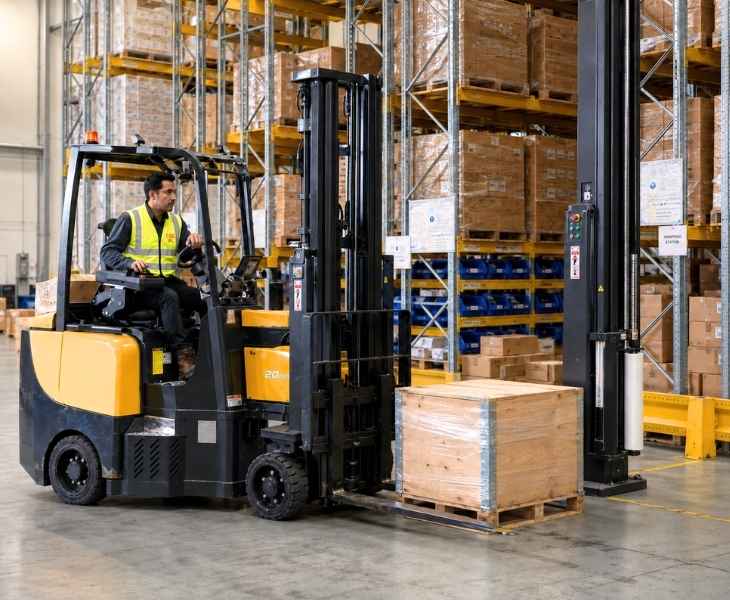
CSG 3PL provides local warehousing and ecommerce fulfilment services in Melbourne, helping Australian brands manage goods receiving, warehousing, stock control, picking and packing, dispatch and returns processing.
Through our WMS, order management system, barcode-based stock control and standardised fulfilment processes, we help brands improve stock accuracy, reduce manual work and streamline order fulfilment.
CSG 3PL is particularly well-suited to e-commerce brands that process over 200 orders per month and have increasingly complex fulfilment requirements.
If your order volume has not yet reached this level but you are already maintaining a steady flow of orders and are in a growth phase, we can also assess a suitable 3PL solution for you based on your stock turnover, number of SKUs and actual fulfilment requirements.
Spend less time managing fulfilment and more time focusing on your customers and business growth.
Ready to streamline your fulfilment process? Talk to CSG 3PL today.
FAQ
How can I reduce fulfilment errors?
Using real-time inventory systems, barcode scanning and standardised warehouse processes can help reduce picking, packing and inventory errors. Clear SOPs and regular staff training can also improve fulfilment accuracy.
How can I speed up my order fulfilment process?
Optimising your warehouse layout, placing high-volume SKUs closer to picking and packing areas, standardising packaging and automating order processing can all help reduce fulfilment time and speed up dispatch.
How can I manage returns more efficiently?
A streamlined returns process can include receiving, inspection, quality checks, inventory updates and restocking. Tracking return reasons can also help identify recurring product or customer issues and improve the overall fulfilment process.