3PL Charges in Australia in 2026: How Much Does a 3PL Actually Cost?
In Australia, how much does it actually cost to outsource ecommerce fulfilment to a 3PL (Third-Party Logistics) provider?
When comparing 3PL providers, many brands initially focus on pick-and-pack fees, storage fees or shipping rates. However, the true cost of fulfilment is not limited to these individual charges.
A 3PL provider that appears cheaper at first glance may ultimately prove more expensive due to warehousing, inbound handling, minimum spend requirements, surcharges or transport costs.
What brands really need to look for is not necessarily the 3PL with the lowest quote, but the fulfilment partner best suited to their stage of business growth, product type and order volume.
This article provides a detailed breakdown of the main fee categories and common hidden costs associated with Australian 3PLs in 2026, as well as what to look out for when comparing quotes from different 3PLs, to help ecommerce brands calculate their actual fulfilment costs more accurately.
What Is Included in 3PL Charges?
The services offered by Australian 3PLs primarily consist of inbound receiving, outbound fulfilment, storage and shipping.
In addition, some 3PLs also charge for account management, returns processing and value-added services such as kitting and relabelling.
Goods Receiving
Most 3PLs include unloading, quantity verification, quality checks and system receiving.
The cost depends primarily on whether the goods are received on pallets or in cartons. In Australia, pallet receiving is typically priced at $15–20 per pallet, while carton receiving is usually $3–6 per carton. Actual prices may vary depending on the 3PL provider, the type of goods and operational requirements.
Factors that significantly affect receiving costs include whether each carton contains a single SKU or multiple SKUs, whether the cartons are labelled, and whether quantities are clearly marked.
Shipments containing a single SKU, with labels applied and quantities clearly marked, can be received and put away more quickly, reducing manual handling time and, as a result, inbound costs.
Warehousing Costs
Warehousing costs primarily refer to the charges incurred from the time goods are received into the warehouse until they are dispatched.
These generally cover storage, stock handling and inventory management.
Charges are typically calculated on a per-pallet, CBM, shelf or storage-location basis, and are invoiced weekly or monthly.
Pallet storage fees for 3PL providers in Australia typically range from approximately $5 to $10 per pallet per week. The actual price is mainly determined by pallet dimensions, stock quantities, warehouse location and the specific billing method.
Warehouse storage: Charged according to the storage format, such as pallets, CBM, shelving or storage locations.
Inventory handling: Stock transfers, pallet splitting and consolidation, etc.
Inventory management: Regular stocktakes to help prevent discrepancies between system records and actual stock levels.
Therefore, when requesting a 3PL warehousing quote, do not simply ask how much each pallet costs; you should also confirm the specific billing units and calculation methods.
Picking and Packing Charges
Pick & Pack typically involves retrieving the products ordered by the customer, then packing and dispatching them in accordance with the brand’s requirements.
Australian 3PL providers generally charge a $2–3 order processing fee, plus a $0.60–2 per-pick fee. The actual price is quoted based primarily on the order structure, product weight, number of SKUs and operational requirements.
It is worth noting that when goods are dispatched as a full carton, only a single picking fee is generally charged.
For example, if a carton contains 10 products but is dispatched as a single unit, some 3PL providers will charge for just one pick rather than 10.
When requesting a quote from a 3PL provider, it is advisable to clarify whether the picking fee is calculated per order, per SKU or per pick.
Account Management Fees
Some 3PLs charge a fixed account management fee of approximately $50–60 per week.
This fee may cover:
Dedicated account manager · System integration · Day-to-day account management · Monthly or quarterly operational reports
Some 3PL fulfilment providers itemise the costs of system connections, integration and dedicated account management separately.
When comparing 3PL quotes, it is advisable to clarify exactly which services are included in the account management fee.
Returns Fees
In addition to the costs mentioned above, it is also important to consider returns fees and delivery charges.
Returns fees are an area that brands often overlook, yet they can form a significant part of fulfilment costs, particularly for brands with high return volumes.
Key areas to consider:
Returns receiving · Product inspection · Restocking · Repackaging · Relabelling · Disposal of unsaleable stock
This aspect is primarily handled in accordance with the brand’s requirements.
As there is no single standard for returns, it is advisable to clarify the brand’s return requirements with the 3PL provider in advance and understand the specific quote and what is included in the fees.
Shipping Costs
Freight charges are primarily levied by carriers and make up a significant part of fulfilment costs.
By selecting a 3PL that partners with major Australian carriers, brands can choose a suitable transport method based on the product, weight and delivery destination.
With the right carrier and transport solution, some brands can reduce their transport costs by 20–30 per cent. Actual savings depend on the product, order volume and delivery area.
Therefore, when comparing 3PL costs, do not limit your comparison to warehousing and pick-and-pack services alone; you should also factor in shipping costs.
What Information Do I Need to Provide to Obtain an Accurate 3PL Quote?
To obtain an accurate 3PL quote, you will typically need to provide the following basic information:
Monthly order volume · Ratio of B2B to D2C orders · Number of SKUs · Average number of SKUs per order · Product dimensions and weight · Average stock levels · Monthly inbound volume · Main delivery regions · Packaging requirements · Whether value-added services are required · Expected start date for using the 3PL service
CSG 3PL is a professional, locally-based 3PL fulfillment company in Australia. If you need an accurate 3PL quote, please send us your basic information.
We can provide tailored solutions and quotes based on your brand’s actual orders, inventory, and product details—rather than just offering a rough estimate of “how much per order.”
Common Hidden Charges and Quotation Issues with 3PLs
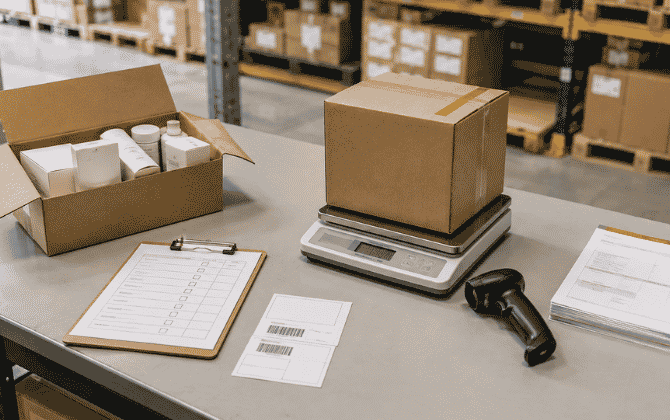
When comparing quotes from different 3PL providers, do not focus solely on the price at face value.
It is advisable to clarify the following points before signing the contract:
- Is storage calculated by pallet, CBM or actual space?
- How many SKUs are included in the picking fee?
- How are charges calculated when an order contains multiple SKUs?
- Is there a minimum monthly spend?
- Is shipping included in the quote?
- Are there tiered pricing structures for different order volumes?
- Is standard packaging included?
- Is there a charge for integration?
- Is there a charge for account management?
- What are the charges for handling returns?
- What are the charges for value-added services such as kitting, relabelling and repacking?
- Is there a setup or onboarding fee?
- Is the contract subject to a long-term commitment?
These costs and billing methods will all affect the final fulfilment cost.
What you should really be comparing is the overall quote, rather than just a single figure on the rate card.
Costs of Self-Fulfilment vs Professional 3PL Fulfilment
Handling fulfilment in-house is not necessarily more expensive than using a 3PL; it depends on order volume, stock levels, labour costs and warehouse operational efficiency.
If a brand manages its own warehouse, it will need to bear the following costs:
Warehouse rent · Warehouse labour · Goods receiving and putaway · Picking and packing · Packaging materials · Warehouse equipment · Inventory management · Systems such as WMS or ERP · Transport costs · Temporary staff during peak seasons
When order volumes are low, in-house fulfilment may still offer greater flexibility.
However, as order volumes continue to grow, brands may need to invest in additional warehouse space, staff and equipment.
When using a 3PL, brands primarily pay for warehousing, fulfilment, transport and other additional services based on their actual business needs.
This means brands do not need to establish a full warehouse operations team themselves, yet can still scale their fulfilment capacity as order volumes grow.
Therefore, when comparing the costs of in-house fulfilment and 3PL, you should not simply compare warehouse rent or the fulfilment cost per order. Instead, calculate the total cost of the entire warehouse operation.
What Fulfilment Costs Can Be Saved by Partnering with CSG?

1. Reduce Shipping Costs by 20–30%
CSG has long cooperated with a number of Australian carriers and selects a suitable carrier based on the product, weight and delivery destination, helping brands reduce their shipping costs.
2. Reduce Warehouse Labour Costs
CSG handles goods receiving, picking, packing and dispatch, eliminating the need to recruit and manage your own warehouse team.
3. Reduce Warehousing Space Costs
There is no need to continually expand your own warehouse as order volumes grow. Instead, you can use specialist 3PL warehousing space based on actual stock levels.
4. Reduce Additional Costs from Incorrect or Missing Shipments
Through the use of a Warehouse Management System (WMS), barcode scanning and standardised fulfilment processes, we minimise additional costs associated with re-dispatches, returns processing and customer service.
5. Reduce Packaging Material Costs
CSG reduces your day-to-day expenditure on packaging materials such as cartons, satchels and adhesive tape by purchasing these in bulk and selecting suitable packaging methods based on the product and order.
FAQ
How Much Do Australian 3PLs Typically Charge per Order?
There is no standard fixed price for 3PL services in Australia.
The actual cost usually depends on monthly order volume, the number of SKUs, stock levels, product dimensions and weight, packaging requirements and the delivery area.
Therefore, it is best for brands to provide actual business data so that the 3PL can provide a quote based on their specific circumstances.
What Costs Are Generally Included in a 3PL Quote?
The services included vary between 3PL providers.
A basic quote may typically cover storage, inbound receiving and Pick & Pack, while services such as shipping, returns, account management, integration and kitting may be charged separately.
Therefore, when comparing quotes from different 3PL providers, it is important to confirm exactly what each cost item covers.
How Should You Compare Quotes from Different 3PLs?
Do not simply compare the price for Pick & Pack alone.
It is advisable to ask different 3PLs to provide quotes based on the same set of data, taking into account your actual order volume, stock levels, number of SKUs, inbound volume, transport requirements and returns.
This allows for a more accurate comparison of overall costs across different 3PLs, rather than merely comparing individual prices such as “$2 per order” or “$6 per pallet per week”.