Running a Shopify store becomes more complex as orders grow.
At first, inventory management, pick & pack, and arranging delivery yourself may work. But once you have more SKUs, more sales channels and more daily orders,order fulfilment can quickly take time away from marketing, product development and customer growth.
This is often when brands start looking for a Shopify 3PL in Australia.
But connecting Shopify to a warehouse is only one part of the decision.
The right 3PL should give you better inventory control, faster order processing and enough flexibility to support the next stage of your business.
Here are the key things to check before choosing a Shopify fulfilment partner.
1. Shopify Integration Should Reduce Manual Work
The first question is simple: how does the 3PL connect with Shopify?
Your orders should be able to move from Shopify into the warehouse fulfilment workflow without your team manually downloading spreadsheets or sending orders by email.
A strong integration should support:
- Automatic order transfer
- Inventory synchronisation
- Order status updates
- Tracking information
- SKU and product data
- Returns and stock adjustments
As your business grows, even small manual processes become expensive.
A warehouse should remove admin work, not create another system for your team to manage.
CSG supports Shopify and more than 40+ ecommerce platforms and systems as part of our workflow.
2. Look for Clear Inventory Visibility
Moving your stock into a 3PL warehouse should not mean losing visibility.
Your fulfilment partner should have a warehouse management system that records stock as it moves through receiving, storage, picking, dispatch and returns.
Ask the 3PL what you can actually see.
Can you check available stock? Can you identify allocated or returned inventory? How quickly are stock movements updated?
This becomes even more important if you sell through Shopify alongside Amazon, eBay, retail, wholesale or other channels.
Good Inventory Management helps your team make purchasing and replenishment decisions using real stock information rather than estimates.
3. Check the Daily Dispatch Cut-Off
Customers do not care how busy your warehouse is. They care about when their order arrives.
That makes the daily order cut-off one of the most important questions to ask a Shopify 3PL.
Inquire with the third-party logistics partner you want to cooperate:
- What time does an order need to reach the warehouse to be processed the same day?
- You should also check what happens during Black Friday, Christmas, product launches and promotional periods.
For eligible orders released before CSG’s daily cut-off, our Melbourne fulfilment operation supports same-day processing and dispatch.
The objective is not simply to pick faster. It is to stop fulfilment from becoming a bottleneck when your Shopify sales increase.
Learn About Our Pick and Pack Services
4. Make Sure the Warehouse Can Scale With Your Stock

Your current storage requirement is only part of the picture.
A Shopify brand can move from a few pallets to far more stock after a successful campaign, wholesale deal or new product launch.
Ask your potential 3PL about:
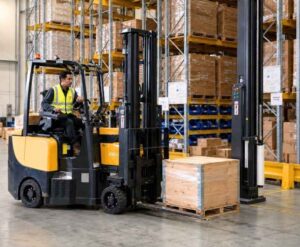
- Pallet and carton storage
- Pick-bin storage
- Secure storage
- Peak-season capacity
- Additional SKU requirements
- B2B and B2C order handling
This is particularly important if you plan to expand your Shopify store into retail or wholesale later.
CSG operates from Melbourne with significant warehouse capacity and supports ecommerce, B2B and mixed fulfilment requirements.
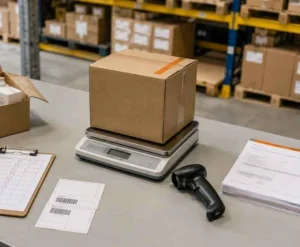
5. Pick and Pack Needs to Match Your Products
Not every Shopify order is a simple one-item parcel.
You may sell bundles, products with multiple variants, fragile items, high-value goods or products that require specific labelling.
Before choosing a 3PL, explain your real order profile.
Ask how the warehouse handles multiple SKUs, barcode scanning, packing instructions, product checks and special handling.
If your business runs regular promotions, also ask how promotional bundles will be prepared during busy periods.
The best fulfilment workflow is not necessarily the most complicated one. It is the one that matches the way your products are actually sold.
6. Do Not Ignore Shopify Returns
Returns are often overlooked when brands compare 3PL providers.
But a returned product can affect your customer experience and your available inventory.
A structured Returns Management Process should cover receiving, inspection, grading and an agreed next action.
Depending on the product, that may include:
Return → Inspect → Repackage → Relabel → Restock
This can help saleable products return to inventory sooner instead of sitting in a returns area waiting for someone to make a decision.
For fashion, beauty, electronics and other return-heavy Shopify stores, this can become a major operational advantage.
7. Your 3PL Should Protect Your Brand Experience
Shopify brands often spend heavily on product photography, website design and advertising. That experience should not disappear when the parcel reaches the warehouse.
There’s no doubt that packaging is crucial to your brand, so if you’re looking for a 3PL company in Australia, be sure to ask if they can provide branded boxes, shipping packaging, inserts, thank-you cards, promotional materials, bundled sales, and kit services.
CSG fully understands the importance of brand marketing to a business. Our branded packaging and kitting services help your brand translate packaging specifications into repeatable warehouse processes, which is particularly useful for subscription boxes, influencer marketing campaigns, gift sets, and product launches.
Your third-party logistics provider operates behind the scenes, but your customers will still see the results.
8. Compare the Total Cost, Not Just the Pick Fee
The lowest pick-and-pack rate does not always produce the lowest total fulfilment cost.
Ask for a clear breakdown of receiving, storage, pick and pack, packaging materials, additional handling, returns, account fees, minimum spend requirements and distribution costs. Then model the quote across an average month, a slow month and a peak month.
It also helps you understand how your fulfilment cost may change as your Shopify order volume grows.
For a deeper breakdown, see 3PL Charges in Australia in 2026.
9. Check Carrier and Delivery Options
A 3PL does not need to be a freight forwarder or courier company to add value to delivery.
What matters is whether the provider can coordinate suitable Australian carrier options around parcel size, destination, urgency and budget, and whether tracking information can feed back into the fulfilment workflow.
Ask which carriers are available, whether their 3PL services can support different order fulfilment, and how metro, regional and B2B deliveries are handled.
CSG focuses on warehousing, fulfilment and Australian domestic distribution coordination. Through third-party carrier networks, we can help brands organise delivery options after orders leave the warehouse.
10. Ask for Clear SLAs and Day-to-Day Support
A good sales conversation is useful. A clear operating commitment is better.
Before signing, ask what the provider commits to for dispatch speed, order accuracy, receiving timeframes, and support response.
Shopify’s current 3PL guidance specifically recommends asking providers about service levels, daily cut-off times, total fulfilment costs, warehouse locations, carriers, returns, system integrations and account support.
You should also know who owns the relationship after onboarding. When a stock discrepancy, urgent order or system issue appears, will you know who to contact and what happens next?
For growing brands, support quality often becomes more important after the first few months than it looked during the sales process. Make sure communication standards are part of the decision, not an afterthought.
Questions to Ask a Shopify 3PL Before Requesting a Quote
Use these questions when you shortlist providers:
- How does your system integrate with Shopify?
- How quickly do inventory changes sync?
- What is your same-day dispatch cut-off?
- What order and inventory accuracy targets do you work to?
- How do you manage Black Friday and campaign-driven spikes?
- How do you process returns from inspection to restocking?
- Can you support branded packaging, bundles and kitting?
- Which carrier options can you coordinate across Australia?
- What fees sit outside the standard pick-and-pack rate?
- Who manages my account and what response time should I expect?
A provider that answers these questions clearly is easier to compare than one that relies on broad claims such as “fast”, “flexible” or “complete” fulfilment.
Looking for a Shopify 3PL in Australia?
CSG provides Australian brands with ecommerce fulfilment, 3PL warehousing, inventory management, pick and pack, branded packaging, returns management and B2B fulfilment support from our Melbourne operation.
Our systems support Shopify and more than 40 ecommerce platforms and integrations, helping orders move from your online store into a connected warehouse fulfilment workflow.
For brands managing both Shopify orders and wholesale or retail channels, CSG can also support B2C parcels and larger B2B fulfilment within the same 3PL operation.
If fulfilment is starting to dictate how fast you can market, launch products or expand channels, the right question is not simply “How much does a 3PL cost?”
It is: “Can this 3PL support the way we plan to grow?”
Talk to CSG about your Shopify store, monthly orders, SKU count and storage requirements to build a practical fulfilment plan for Australia.
Let your Shopify store generate the orders. Let CSG handle what happens next.