Logistics outsourcing used to be something only large companies talked about. Now it’s almost a necessity for smaller brands too, especially those moving from a few weekly orders to something that feels a bit more demanding. The moment inventory starts to take over your living room or your team spends half the day printing labels, the idea of external logistics support stops sounding like a luxury and becomes the next logical step.
Understanding the difference between 3PL and 4PL is part of that shift. It’s not the most glamorous topic, yet it influences everything from delivery speed to how confidently a business can scale.
This guide walks through both models in a grounded, practical way, helping you work out what actually fits your stage of growth.
What Is 3PL (Third-Party Logistics)?
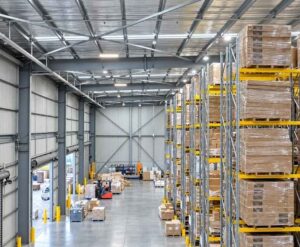
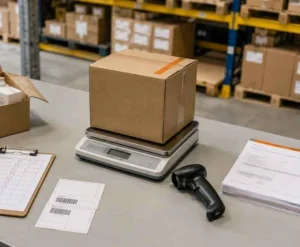
A 3PL handles the nuts and bolts of fulfilment. Think warehousing, picking and packing, inventory handling, and shipping. It’s the kind of support that lets a business step away from the day-to-day chaos of cartons and courier pickups, while still staying closely involved in decisions.
Many smaller and mid-sized brands lean toward 3PLs because logistics is kept operational rather than strategic. You still choose your packaging. You still decide on delivery timeframes. You just don’t have to physically manage the process.
Some of the common 3PL services include:
- Storage
- Pick and pack
- Freight coordination
- Returns handling
- Inventory reporting
A 3PL setup tends to work best for businesses with steady monthly orders. It also suits brands taking their first steps into new regions, where the workload increases but the supply chain isn’t overly complicated yet. And then there are the businesses that simply want fulfilment to run smoothly in the background so they can focus on product development or marketing without constantly juggling warehouse tasks.
Quick signs 3PL might be right for you
- Order volumes are growing, but not wildly unpredictable
- You want clearer inventory visibility without hiring more staff
- You prefer to retain control over suppliers and carriers
What Is 4PL (Fourth-Party Logistics)?
If 3PL feels hands-on, 4PL shifts toward hands-off. A 4PL provider steps in to oversee the entire supply chain rather than just physical fulfilment. That can include coordinating multiple logistics partners, overseeing procurement, selecting carriers, and, sometimes, redesigning the supply chain to operate more efficiently.
A 4PL behaves like a logistics architect. They don’t simply ship orders; they look at the entire system and decide how it could flow more smoothly. Some growing companies find this level of support appealing, especially once they start juggling multiple suppliers, bulk manufacturing, or multi-warehouse setups.
Example of 4PL services
- Vendor and carrier management
- Supply chain optimisation
- Network planning
- Technology integration across all logistics partners
4PL is mostly used by fast-scaling eCommerce brands, enterprises expanding internationally, and businesses operating with complex inbound and outbound flows. Some companies don’t feel ready for it; others can’t operate without it once the system reaches a certain size.
Key Differences Between 3PL and 4PL
This is where the distinctions between 3PL vs 4PL become clearer.
| Feature | 3PL | 4PL |
| Core focus | Handles the physical movement of goods | Oversees and designs the entire supply chain system |
| Ownership of assets | Operates warehouses, packing lines, and often transports assets | Rarely owns assets; manages and coordinates multiple partners instead |
| Level of control | You stay closely involved in operational decisions | Provider becomes the primary manager of your logistics chain |
| Technology integration | Uses fulfilment-focused platforms for orders and inventory | Connects data across all suppliers and logistics partners, creating a central view of the supply chain |
| Best for | Small to mid-size brands with steady growth | Fast-growing businesses with complex or multi-layered logistics needs |
Which Is Better for Growing Businesses?
There isn’t a universal answer. Some brands outgrow a 3PL almost suddenly, while others stay with one for years and never feel restricted.
If your main challenge is order fulfilment, and you simply want faster, cleaner operations, 3PL support usually hits the mark. Many brands in Australia prefer this because it removes warehouse pressure without distancing them from supplier relationships.
A few early signs that indicate the time to upgrade to 4PL:
- Multiple suppliers with inconsistent lead times
- Expanding into several sales channels
- Unpredictable volume spikes
- Need for coordinated, top-down supply chain planning
Think of 4PL as a step you take when operational tasks evolve into strategic challenges.
Cost, Technology & Scalability Comparison
Short-term, 3PL tends to be more affordable because you’re paying for fulfilment rather than system design. Long-term, 4PL can produce savings by reducing inefficiencies, though the upfront investment is usually higher.
Technology also shifts between the two models. A 3PL offers order tracking, inventory visibility, and integration with online stores. A 4PL layer provides additional analytics, planning tools, and multi-partner integrations.
Scalability is where the difference becomes more noticeable. During peak seasons, a 3PL increases labour and capacity inside its own facilities. A 4PL redistributes resources across an entire network when needed, helping manage unpredictable spikes and protecting the customer experience during busy periods.
Real-World Example
Imagine a small Australian fashion label sending out a few dozen orders each week. A 3PL works perfectly as they pack orders, handle returns, and provide inventory counts. A year later, the brand begins sourcing from several overseas suppliers, and lead times change unexpectedly. Stock gaps start appearing at the worst possible moments. The team spends hours coordinating freight and tracking inbound shipments. At this point, switching to a 4PL makes sense. The provider steps in, reorganises the supply chain, and manages every partner involved.
Cases like this are common in Australia, especially with longer transport distances and regional fulfilment challenges.
Common Misconceptions About 3pl vs 4pl
- “4PL is only for big corporations.” Many mid-size eCommerce brands use it once their logistics become too tangled.
- “They’re basically the same thing.” A 3PL focuses on fulfilment, while a 4PL designs and manages the entire supply chain.
- “Switching providers is too complex.” It takes planning, but a structured migration can be smoother than expected.
How to Choose the Right Logistics Partner
A few helpful questions:
- What level of visibility do you need day to day?
- Do you want someone to manage tasks or redesign the system?
- How flexible should the provider be as your product range grows?
- Is their technology easy to integrate with your current setup?
- Are costs transparent and predictable?
Look for a partner who communicates clearly and adapts to peaks, product changes, and new sales channels without friction.
Final Recommendation
Both models have a place in a growing business. A 3PL gives you reliable fulfilment and room to grow without unnecessary complexity. A 4PL becomes valuable once your supply chain feels too big to manage alone. Many brands naturally move from one to the other as they scale, which is a steady, low-stress way to expand.
Ready to streamline your fulfilment operations?
If you’re exploring outsourced fulfilment and want a partner who genuinely understands the day-to-day hurdles of growing a business, CSG 3PL offers tailored solutions for Australian businesses. Whether you’re just starting to streamline your operations or preparing for a more advanced logistics setup, our team can help you move forward with a clearer plan.
Speak with our logistics experts on (03) 9117 6197 to find the best solution for your business growth.