Logistics used to feel like a background function. Important, yes, but largely invisible. That’s no longer the case. Today, it sits right at the centre of customer experience, brand reputation, and profitability. Technology is moving quickly. And customer expectations are higher than ever.
Staying ahead of logistics trends for 2026 isn’t optional. It’s becoming a defining factor in whether a supply chain operates smoothly or constantly reacts to problems. The businesses that anticipate change tend to absorb shocks better. The ones that don’t often scramble.
This blog explores the key innovations reshaping supply chains in 2026 and what they mean for forward-thinking businesses.
You Might Also Like: Skid vs Pallet
Logistics Trends for 2026
The Role of Technology in Modern Logistics
Investing in technology is an operational cost. It’s not for the future; it needs to be running alongside the rest of your business.
Artificial intelligence and machine learning are revolutionising predictive logistics. Gone are the days of hitting the panic button when the demand spikes up or a shipment is delayed. Businesses are now using algorithms to forecast those issues. Predictive analytics can sniff out seasonal fluctuations, supplier risks, and even weather-related disruptions. While these forecasts don’t always hit the mark, they do reduce surprises, and that means fewer costly last-minute scrambles.
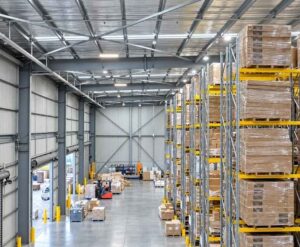
Automation is also redefining warehousing. From automated storage and retrieval systems to inventory management platforms that self-adjust in real-time based on what’s actually in stock, it is no wonder efficiency gains are so tangible. Warehouses that were once plagued by errors are now running with almost no discrepancies. It’s not dynamic work, but it’s a big improvement.
Then there’s all the IoT-enabled tracking going on. Smart sensors embedded in shipments give you real-time visibility to the temperature, location, and handling conditions. For industries like pharmaceuticals or food, that visibility is not just nice to have; it’s absolutely essential.
These logistics trends come together to deliver speed, accuracy, and transparency, and customers can tell the difference.
Sustainable Logistics and Green Supply Chains
Electric vehicle fleets are gradually entering mainstream logistics operations. Carbon-neutral shipping options are becoming more accessible, and businesses are measuring emissions with greater precision. There’s still debate about cost implications, but regulatory pressure and consumer expectations are pushing sustainability forward regardless.
Optimising delivery routes using AI saves time and reduces fuel consumption. Even the smallest improvements in route planning can have a significant environmental impact over thousands of deliveries.
Packaging is another area under scrutiny. Reducing excess materials, shifting to recyclable options, and designing packaging for efficient transport all contribute to greener supply chains.
Regulatory frameworks in many regions are tightening environmental standards. Companies that proactively adapt often find the transition smoother than those forced into compliance later.
Last-Mile Delivery Innovations
Last-mile deliveries are arguably the most chaotic part of the logistics cycle. Everyone wants their product now, which increases pressure to come up with out-of-the-box ideas.
Drones and autonomous vehicles, while limited in scale, are steadily being integrated into urban and regional delivery networks. Micro-fulfilment centres, located closer to population hubs, are dramatically reducing transit times.
Speed matters. But reliability matters more. Businesses are investing in systems that optimise last-mile routing while maintaining cost control. That balance isn’t easy. Faster delivery often increases operational complexity. Yet customer expectations, especially in ecommerce, continue to rise.
The interesting shift is how last-mile innovation enhances the overall customer experience. Real-time delivery tracking, precise arrival windows, and streamlined returns processes are becoming standard. When done well, they build trust. When done poorly, they erode it quickly.
Data-Driven Supply Chain Management
Data is everywhere. The challenge is using it intelligently.
Big data analytics allows businesses to forecast demand more accurately and optimise routes with granular precision. Instead of relying solely on historical averages, companies can incorporate real-time sales data, market signals, and even external variables.
Predictive insights reduce stockouts and overstocking. That balance is delicate. Overstocking ties up capital. Stockouts frustrate customers. Data-driven models help maintain equilibrium, though they still require human oversight.
Some global retailers have demonstrated how advanced analytics can reshape distribution networks entirely, identifying underperforming routes and consolidating shipments more efficiently.
The broader trend is clear: logistics decisions are increasingly evidence-based rather than intuition-driven. That shift improves resilience and performance.
Integration of 3PL and 4PL Services
Outsourcing logistics is evolving. Traditional 3PL arrangements used to be just about executing transport, warehousing, and distribution. Now, integrated 3PL and 4PL models provide strategic oversight and operational management.
For many businesses, especially ecommerce brands growing at a rapid pace, that kind of scalability is a major benefit. As demand fluctuates, an integrated provider can scale up or down accordingly. No need for massive internal restructuring.
Flexibility, cost efficiency, and access to advanced tech platforms are all major draws. Take a mid-sized retailer, for example. They might not have the resources to build a sophisticated analytics platform on their own. But with a capable 3PL/4PL provider, they can get that same level of insight without having to do it all themselves.
These logistics trends reflect a shift away from transactional partnerships and towards more strategic collaborations.
Robotics and Automation in Warehousing
Automated picking, packing, and sorting systems are very good at moving goods. Human error is almost eliminated. Collaborative robots, or cobots for short, work alongside human teams, handling repetitive tasks so humans can focus on the important stuff.
There’s a lot of worry about robots replacing people, but in practice, many warehouses are using them to address labour shortages rather than simply replacing workers.
Accuracy improves, scalability increases, and during peak seasons, automation is much better at handling demand spikes than manual operations. The upfront cost can be high, but the efficiency gains often justify it in the long run.
You Might Also Like: 3PL Cost
Cybersecurity and Digital Risk Management
Supply chains now rely heavily on cloud platforms, IoT devices, and interconnected software systems. One security breach, and you could be looking at a major operational disruption across multiple parts of your business.
The key to cybersecurity in 2026 is multi-layered protection: encrypted data transmission, secure API integrations, continuous monitoring, and employee training. Even still, human error remains the biggest vulnerability.
Planning for cyber resilience is no longer optional. It’s fundamental. Businesses that overlook digital risk management may find operational disruption far more costly than preventative investment.
Global Supply Chain Resilience
Pandemics, geopolitical tensions, and natural disasters have exposed vulnerabilities in global supply networks over the last few years. Building flexibility is the only way forward.
Diversifying suppliers, establishing regional distribution hubs, and maintaining strategic inventory buffers are becoming standard risk mitigation strategies. Redundancy, once seen as inefficiency, is now viewed as resilience.
Multiple sourcing arrangements reduce dependence on a single supplier. Nearshoring reduces transit risks. Scenario planning prepares organisations for disruptions that feel improbable until they aren’t.
Resilience isn’t about eliminating risk. It’s about absorbing it without collapsing.
Conclusion
The logistics trends shaping 2026 reflect a broader shift toward intelligent, resilient, and sustainable supply chains. From AI-driven forecasting and robotics to green transport solutions and integrated 3PL/4PL models, innovation is redefining the global supply chain ecosystem.
Businesses that embrace these changes thoughtfully are better positioned to adapt in real time.
Ready to Transform Your Supply Chain for 2026?
At CSG 3PL, we specialise in providing flexible, scalable, and innovative warehousing and distribution solutions tailored to your business needs.
Call (03) 9117 6197 today for a tailored quote and discover how a strategic logistics partner can streamline your operations.